
Raising Bilingual Children in Sacramento: Why Culturally Responsive Pediatric Care Matters
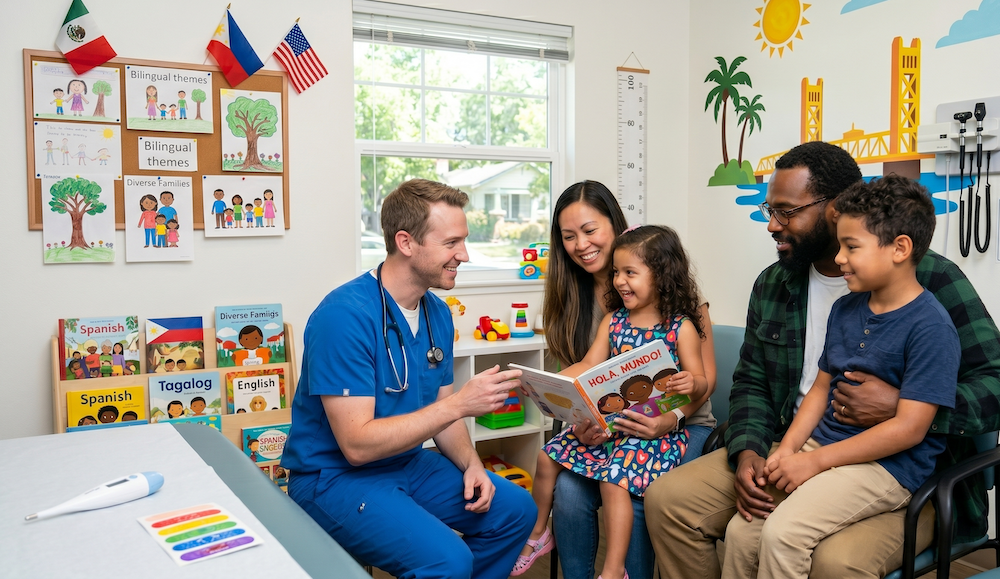
In many families residing in Sacramento, the household is not limited to just one language. Kids learn English at school, Spanish from their grandmas, and Hmong from their parents; or a mixture of all of these languages depending on what languages their family speaks because of their culture and history.
Being able to speak more than one language is beneficial. Children are able to communicate with their relatives, maintain their culture, and learn about the world outside of their community. Nevertheless, it can be difficult for immigrant and refugee families to find appropriate health care that respects and recognizes their linguistic background and culture.
The team at Health And Life Organization (HALO) believes every kid should get appropriate health care. This involves providing a setting where families feel comfortable and free to communicate with their providers.
Sacramento's Diversity Is One of Its Greatest Strengths
The city of Sacramento has individuals representing various cultures and backgrounds. Our community is composed of families who come from diverse linguistic and cultural backgrounds. Many parents and caregivers are faced with the daunting task of caring for their children in a foreign health care system and/or language or country.
Language barriers and misunderstandings can make access to health care even more difficult, creating problems related to communication within health care services. When parents and caregivers are unsure about the information they are receiving and unable to discuss their concerns effectively, the ability to make sound health care decisions is made even more difficult.
This situation emphasizes the importance of culturally-responsive pediatrics.
What Does Culturally Responsive Pediatric Care Mean?
Culturally responsive healthcare is not only about providing clinical care but about spending time understanding every family's culture, beliefs, values, and preferred language.
Some aspects of culturally responsive pediatrics may involve:
- Listening to parent's concerns and queries attentively.
- Communicating health-related information in a comprehensible way.
- Considering cultural views on child development, nutrition, and family structure.
- Fostering opportunities for productive dialogue between parents and professionals.
- Understanding that each family has its story and healthcare experience.
At HALO, we recognize that good relationships form the basis of high-quality care. If patients feel listened to and valued, they will be more likely to participate in preventive care and raise issues.
Why Language Access Matters
Effective communication is critical in promoting the health of children.
Parents and guardians who can communicate freely with the medical professionals treating their child will be better prepared to comprehend instructions, advice regarding treatment, and preventive care guidance.
If there is a problem communicating due to language barriers, parents may find themselves postponing consultations with their doctors, which can cause harm to the child in question. Never should a child take on the burden of explaining complicated medical terms to their parents or guardians.
In order to ensure that parents play an active role in decision making during healthcare consultation, effective communication needs to be encouraged.
Understanding the Needs of Bilingual Children
Children who grow up being bilingual tend to have their own paths of development. Bilingualism is entirely natural for children and should be viewed as a normal part of childhood; language skills in such cases may develop differently compared to monolingual children.
Pediatricians working with bilingual families know how important it is to consider all of the languages that a child speaks when assessing the child’s development. As a result, it becomes possible to provide a child with all necessary help and to avoid unnecessary worry in connection with the normal development of bilingual children.
In addition, bilingual children often have an important role in the family; they become translators and help relatives deal with different institutions. Although most children are happy to participate in such activities, they can place some extra pressure on them, which pediatricians should keep in mind.
Common Questions Parents Have about Bilingual Childhood
Is speaking multiple languages at home going to delay my child's ability to talk?
It is unlikely. Having two or three languages in your home will not affect negatively your child's capacity to learn to speak or their linguistic abilities. The differences in development may occur, but in most cases, they will be typical of bilingual kids. If you are worried about your kid's linguistic development, a healthcare professional will help you understand whether anything needs to be done about it.
Am I supposed to switch to English-only communication with my kid in order to prevent them from getting confused?
Not necessarily. Keeping up the use of your native language when communicating with your little one will make the connection between the two of you stronger and help your kid develop their cultural identity. Research shows that keeping kids speaking their home language is beneficial for their development.
I need an interpreter for my child's appointment at HALO, what should I do?
Your family is welcome at HALO and we do everything we can to create comfortable conditions for every visit. Let our staff know that you need some help with translation ahead of time and we will try to accommodate your request in the best way possible.
How often should I take my child to see a pediatrician at HALO?
Well-baby checks are crucial for preventive care. They will allow you and your little one's healthcare provider to keep track of their developmental milestones, ensure that your baby received all necessary immunizations, discuss your worries and give your kid a check-up on multiple aspects of their health.
Do I have to prepare something for my baby's initial visit at HALO?
If you have your child's vaccination record, a list of medications they use (even if it is empty), insurance card, and some other important documents, you may present them to the medical professional who conducts your kid's appointment. However, even if you cannot get all these documents together, there is nothing to worry about.
My baby struggles behaviorally or suffers from mental stress; can HALO help me with this problem?
Of course. Mental wellbeing is very important, but often it goes unnoticed. If you have any doubts or worries concerning your child's mental state – be it school troubles, behavioral difficulties, stress or something else, feel free to tell your kid's healthcare provider about them.
Halo Helping Supporting Bilingual Children as They Grow, Learn, and Thrive
Each family deserves the opportunity to receive quality healthcare from a medical practice that speaks their language, values their culture, and assists their child’s unique development process. At HALO, it is our goal to provide your family with compassionate pediatric services that will assist your child in thriving. No matter what your situation is – your family may be new to the area, you may speak more than one language, or simply want to find a qualified pediatrician to serve your child – we are here to help.
Share this post: