
Beat the Heat: Halo's Practical Guide to Staying Cool This Summer

Medical Disclaimer: This article is for general educational purposes only and is not a substitute for professional medical advice. Always follow your doctor's instructions, especially regarding chronic conditions, medications, or fluid restrictions. If you suspect heat stroke or a medical emergency, call 911 immediately.
Summer brings longer days, sunny outdoor gatherings, and plenty of opportunities to create lasting memories with family. But when temperatures surge into heat wave territory, extreme heat becomes more than an inconvenience, it poses a genuine health risk. Older adults, young children, family caregivers, and individuals with chronic health conditions face elevated risks for heat-related illness when summer temperatures peak.
Important: People with medical conditions, fluid restrictions, or medications that affect hydration or heat tolerance should consult their healthcare professional for individualized guidance.
At Halo, our mission is to deliver proactive, caring health guidance that keeps your family safe, comfortable, and supported year-round. This guide breaks down actionable, doctor-informed steps to help you manage your indoor environment, choose hydrating foods, adapt your physical activity, and recognize emergency warning signs before a minor issue becomes dangerous.
1. Stay Cool Indoors and Adjust Your Environment
Keeping your home safe during extreme heat requires a proactive approach to indoor temperature management. When outdoor temperatures exceed normal body temperature, unconditioned homes can trap heat quickly.
- Optimize Air Conditioning: Set central AC thermostats to an efficient setting (around 78°F when you are home) to balance indoor comfort with energy strain. If central AC isn't available, concentrate window units in key spaces like bedrooms or living areas where family members spend the most time.
- Block Radiant Heat: Close blinds, shades, or blackout curtains on sun-facing windows during peak daylight hours (10:00 a.m. to 6:00 p.m.) to prevent solar radiation from heating room interiors.
- Time Window Ventilation: Open windows during cool overnight hours or early mornings to encourage cross-ventilation. Close them securely as soon as outdoor temperatures match or exceed your home's internal temperature.
- Limit Internal Heat Sources: Avoid using stoves, ovens, or large heat-generating appliances during peak warmth. Choose raw meals, outdoor grilling in shaded areas, or quick microwave preparations instead.
- Utilize Local Cooling Centers: If your home lacks functional air conditioning and internal heat reaches unsafe levels, take advantage of public cooling shelters, local libraries, or community centers equipped with climate control.
2. Smart Hydration: Beyond Just Drinking Water
Effective hydration during a heat wave requires consistent fluid intake and mineral balance rather than simply drinking water when thirst strikes. Waiting until you feel thirsty often means mild dehydration has already set in.
Hydration Best Practices
- Sip Frequently: Drink small amounts of fluids continuously throughout the day rather than drinking large volumes all at once. Aim for a steady pace of a few sips every 15–20 minutes.
- Avoid Dehydrating Beverages: Limit drinks high in sugar, alcohol, or heavy caffeine content. These act as diuretics or increase fluid loss through metabolism, making dehydration worse.
- Replenish Electrolytes When Needed: During prolonged heavy sweating or extended activity outdoors (such as working or exercising in high heat for hours), electrolyte-infused beverages or oral rehydration solutions can help replenish lost minerals. For ordinary daily indoor activities, plain water is usually sufficient unless otherwise advised by your physician.
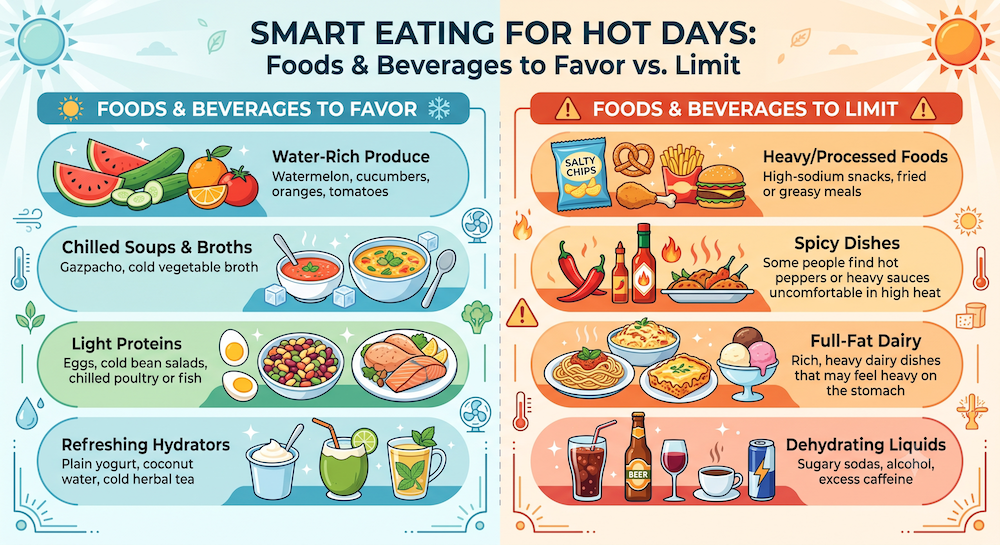
3. What to Eat (and Avoid) During Extreme Heat
Digestion naturally produces heat within the body—a physiological process known as diet-induced thermogenesis. Digesting heavy, high-fat, or complex foods forces your metabolic system to work harder, which can leave you feeling warm or sluggish.
Caregiver Tip: Transition your family toward smaller, more frequent meals throughout the day. Light meals ease the digestive load, preventing that heavy, overheated feeling after eating.
4. Exercise Smart, Not Hard
Staying active during the summer shouldn't come at the expense of your heat safety. Modifying your activity type, location, and timing lets you maintain physical health without overtaxing your cooling mechanisms.
Low-Impact Water Workouts
Water-based activities are among the most refreshing ways to stay fit during extreme heat. Swimming, water walking, and aqua aerobics harness water's natural thermal conductivity—helping transfer heat away from your skin while offering low-impact joint support.
Understanding the Difference: Running outdoors on a hot day places significant demand on your heart and thermoregulatory system. Swimming in a cool pool helps cool the body as you move, reducing overall heat strain compared to intense outdoor land workouts—though standard cardiovascular precautions still apply.
Indoor & Low-Intensity Alternatives
If pool access isn't available, move outdoor workouts to early morning hours (before 8:00 a.m.) or late evening when solar radiation is lowest. Alternatively, stay indoors for light yoga, gentle stretching, or low-intensity workouts in air-conditioned spaces. Avoid strenuous outdoor exertion entirely between 12:00 p.m. and 3:00 p.m.
Hydration Protocol for Physical Activity
These intake amounts are general estimates; exact fluid needs vary based on exercise intensity, sweat rate, weather conditions, and medical status:
Pre-Workout: Try sipping roughly 16 oz of water 1–2 hours prior to physical activity.
During Exercise: Sip 4–8 oz of water every 10–15 minutes as tolerated.
Post-Workout: Consume fluid gradually to replace sweat loss
Safety Note:
Many prescription and over-the-counter medications can alter fluid balance, heart rate response, sweat regulation, or heat tolerance. This includes blood pressure medications, diuretics, antihistamines, certain psychiatric medications, and stimulants. If you take any regular medications, check with your healthcare provider for personalized hot-weather advice.
5. Protect Vulnerable Loved Ones and Pets
Heat affects every body differently. Caregivers and family members must take proactive steps to safeguard high-risk individuals and household animals.
Never Leave Anyone in a Parked Car: Interior temperatures inside a sealed car can jump 20°F in less than 10 minutes, rapidly reaching dangerous or fatal levels—even with windows left slightly open. Never leave children, older adults, or pets unattended in a vehicle.
Check on Older Neighbors and Family: Older adults produce less sweat and may experience decreased thirst sensation or underlying health conditions that affect heat adaptation. Visit or call elderly relatives twice daily during heat waves to confirm their cooling systems are operational.
Practice Pet Safety: Provide outdoor pets with abundant shade and fresh, cool water. Test asphalt and pavement temperature with the back of your hand—if it is too hot to hold comfortably for 7 seconds, it is too hot for sensitive paw pads.
6. Know the Warning Signs: Heat Exhaustion vs. Heat Stroke
Recognizing heat-related symptoms quickly allows you to step in before a mild issue turns serious. While heat exhaustion can be managed with prompt cooling steps, heat stroke is a severe medical emergency requiring immediate 911 intervention.
Symptom Comparison & Action Steps
- Heat Exhaustion:
- Symptoms: Heavy sweating, pale or clammy skin, fast but weak pulse, dizziness, headache, muscle cramps, or nausea.
- What to Do: Move the individual immediately into an air-conditioned space or shaded area. Loosen tight clothing, apply cool, wet cloths to the neck and wrists, and offer small sips of water. Seek medical evaluation if symptoms worsen or do not improve after one hour.
- Heat Stroke:
- Symptoms: Core body temperature above 103°F, hot, red, dry OR damp skin, fast, strong pulse, confusion, slurred speech, or loss of consciousness.
- What to Do: Call 911 immediately. Move the person to a cooler area and rapidly cool their body using ice packs placed under the armpits and groin, cool water baths, or wet sheets. Do not attempt to administer liquids to an unconscious person.
Frequently Asked Questions (FAQ)
What is the fastest way to lower body temperature during a heat wave?
The fastest way to lower core body temperature is by applying cold water or ice packs to key pulse points, such as the neck, wrists, armpits, and groin, or taking a cool (not ice-cold) shower or bath.
How much water should I drink per day in extreme heat?
Fluid requirements vary widely based on body size, activity level, climate, and underlying health. Rather than adhering to a strict fluid target, focus on sipping liquids consistently throughout the day to stay ahead of thirst. Checking that your urine is clear or pale yellow is a general indicator of healthy hydration, though individuals with heart or kidney conditions should strictly follow their doctor's fluid guidelines.
Can electric fans take the place of air conditioning during heat waves?
Per CDC guidance, electric fans should only be relied upon when indoor temperatures are below 90°F. When indoor heat climbs above 90°F, fans blowing dry heat across the skin can accelerate dehydration and body overheating. Transition to air-conditioned spaces or public cooling centers when temperatures exceed this threshold.
Stay Safe and Informed with Halo
Protecting your health during extreme summer weather comes down to small, proactive choices: staying hydrated, adapting your daily routine, and keeping a watchful eye on loved ones.
At Halo, we are dedicated to bringing clear, practical wellness guidance directly to caregivers and families. For more practical advice on keeping your family healthy and supported, explore our latest care guides on the Halo Blog.
Share this post: