
Building a Life in Healthcare: Working Your Way Up in Nursing

Healthcare is not a stagnant profession; it is a path of development and impact that changes with time. Of all the healthcare professions out there, nursing is arguably the most exciting career path in medicine—it operates on the principle of a ladder, with individuals being able to fast track their way into employment, gain valuable clinical skills, and climb up through the ranks via education and autonomy.
Understanding the levels of nursing education is the essential part of building a career in healthcare.
From Patient Care to Clinical Expertise: The Path of a Nursing Ladder
Many nurses begin their journey at the level of bedside care. CNAs play the role of human interaction at the bedside by helping patients with their basic needs such as personal hygiene and mobility and by monitoring their vital signs after receiving a 4- to 12-week certificate program. Building on this foundation, LPNs complete a one-year vocational program to be able to administer medications and wound care as well as perform clinical assessments following orders from a physician or RN.
Those who plan on becoming fully involved in the process of clinical management have two possible ways to become a nurse. ADN is obtained within two years, providing quick access to the field of clinical nursing practice. BSN takes four years to complete, providing students with more knowledge about leadership, community health, and evidence-based practice. Both graduates need to take the same NCLEX-RN license examination to work in the field of clinical nursing.
At the pinnacle of clinical practice stands Advanced Practice Registered Nurses, such as FNPs. Having obtained an MSN or DNP, Nurse Practitioners move from carrying out a treatment plan to creating one. Being highly autonomous, NPs conduct physical assessments, diagnose complicated problems, order and interpret various tests, prescribe medications, and provide all-around healthcare services for the whole family.
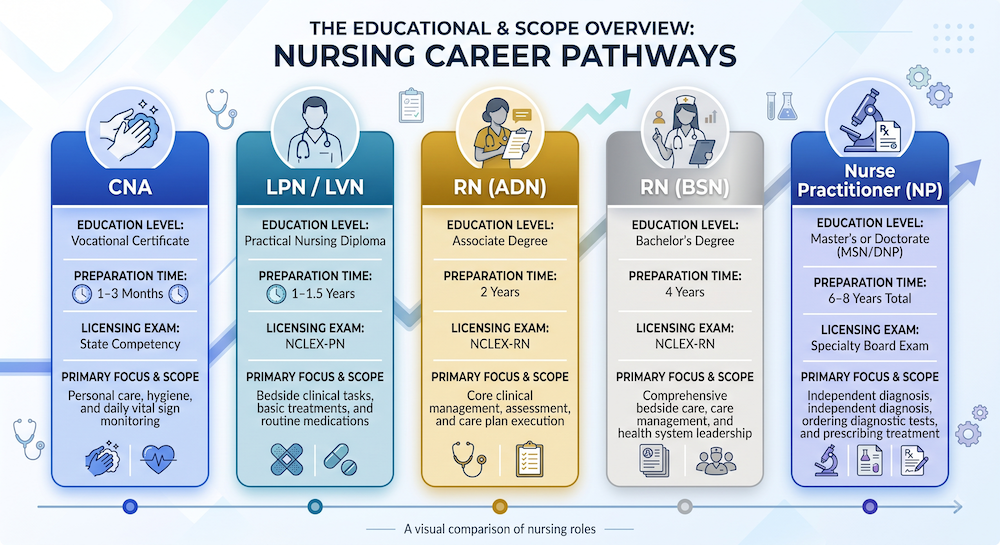
The Educational & Scope Overview
| Career Role | Education Level | Preparation Time | Licensing Exam | Primary Focus & Scope |
|---|---|---|---|---|
| CNA | Vocational Certificate | 1–3 Months | State Competency | Personal care, hygiene, and daily vital sign monitoring |
| LPN / LVN | Practical Nursing Diploma | 1–1.5 Years | NCLEX-PN | Bedside clinical tasks, basic treatments, and routine medications |
| RN (ADN) | Associate Degree | 2 Years | NCLEX-RN | Core clinical management, assessment, and care plan execution |
| RN (BSN) | Bachelor's Degree | 4 Years | NCLEX-RN | Comprehensive bedside care, care management, and health system leadership |
| Nurse Practitioner (NP) | Master's or Doctorate (MSN/DNP) | 6–8 Years Total | Specialty Board Exam | Independent diagnosis, ordering diagnostic tests, and prescribing treatment |
Purpose, Respect, and Influence: The Next Stage in HALO Career Development
Becoming a nurse is not only about completing certain certifications and requirements; it is a choice to be present for those who desperately need help.
In Health And Life Organization (HALO), a non-profit Federally Qualified Health Center operating in the Greater Sacramento area, we respect the professionalism of clinicians, pay attention to what they have to say and ensure that their efforts are influencing people’s lives for the better.
At the moment, HALO is looking for specialists willing to join us and occupy clinical positions within our health centers:
Family Nurse Practitioners who will provide comprehensive primary care at our community clinics.- Mobile Family Nurse Practitioners responsible for direct patient outreach to schools and community members.
If you are an experienced advanced clinician or just beginning your journey in community health, join HALO and find your professional purpose.
Find available jobs and apply for your favorite position on HALO employment portal.
Share this post: